Edge AI
Edge AI Camera for Traffic & Parking
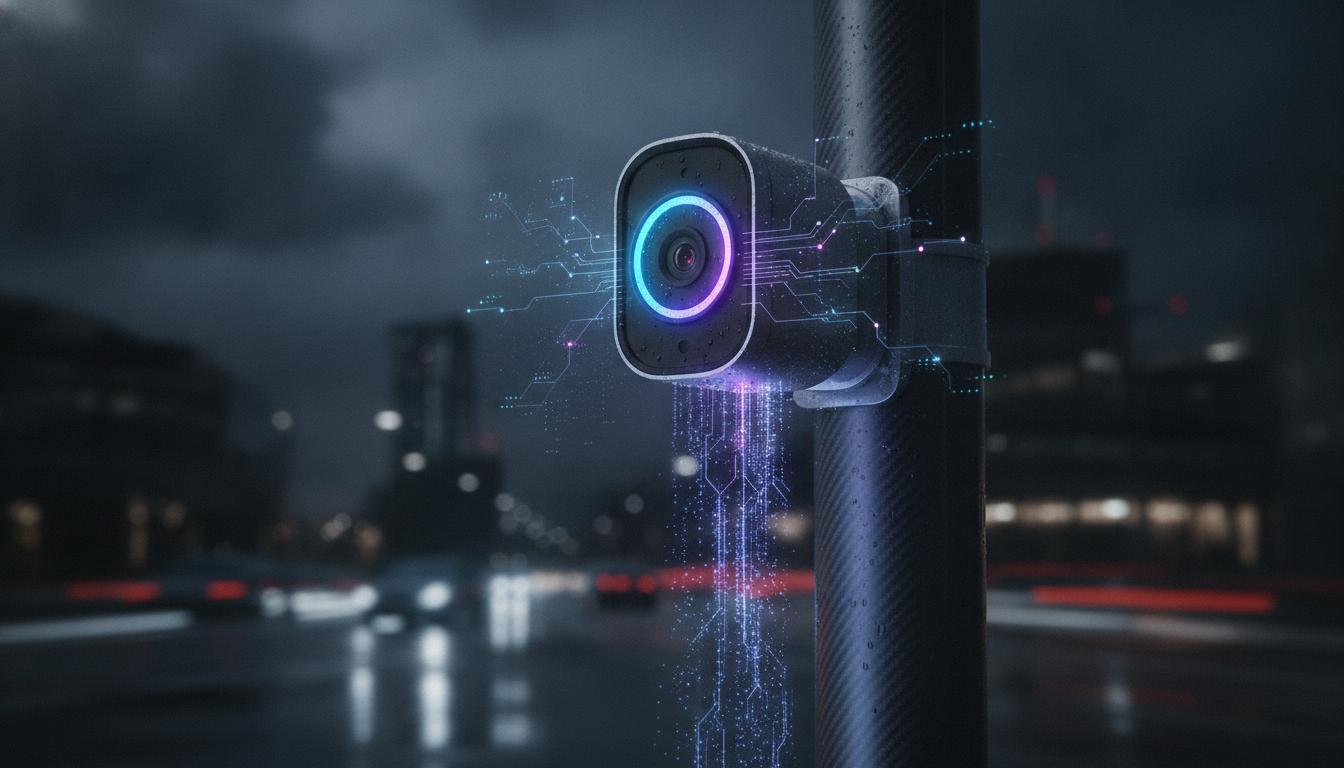
Why send data to the cloud when decisions need to happen in milliseconds? Our edge AI camera architecture brings inference to the device.
The Problem
Bandwidth costs scale with camera count, making cloud-first vision economically unsustainable at city scale.
Latency kills real-time applications — traffic monitoring, safety compliance, and industrial quality control all require sub-second response.
Privacy regulations restrict cross-border video streaming in many jurisdictions.
Internet outages blind cloud-dependent systems when they are needed most.
Our Approach
- On-device inference using an RK3588-class NPU for real-time object detection, classification, and anomaly detection.
- Hybrid architecture: edge for real-time decisions, cloud for historical analysis and model updates.
- Powers our Smart Parking and Smart Traffic modules, plus industrial safety and perimeter security use cases.
- Scalable deployment from a single pilot camera to a city-wide network without infrastructure overhaul.
- Designed for tropical conditions, variable power, and 4G/LTE backhaul where fibre is unavailable.
Use Cases
Smart Parking & Traffic
Bay occupancy and vehicle classification for Malaysian PBTs.
Industrial Safety
PPE compliance, restricted zone intrusion, anomaly detection.
Perimeter Security
Edge-based threat detection with minimal false alarms.
Frequently Asked Questions
What is an Edge AI camera and how is it different from a standard IP camera?+
An Edge AI camera performs artificial intelligence inference directly on the device using a dedicated Neural Processing Unit (NPU), such as the RK3588. Unlike a standard IP camera that streams video to a cloud server for analysis, an Edge AI camera makes real-time decisions locally — detecting objects, classifying vehicles, or identifying safety violations in milliseconds without depending on a constant high-bandwidth connection.
Why is Edge AI better than cloud-based video analytics for Malaysia?+
Edge AI eliminates three major limitations of cloud-dependent systems: bandwidth costs that scale with every camera added, latency that prevents real-time responses in traffic, safety, and security applications, and internet outages that blind the system when it is needed most. It also addresses privacy regulations that restrict cross-border video streaming.
What applications does Cre8 IOT's Edge AI Camera support?+
Our Edge AI cameras power Smart Parking (bay occupancy) and Smart Traffic (vehicle classification, junction analytics) for Malaysian PBTs and system integrators, as well as industrial safety compliance and perimeter security. The system uses a hybrid architecture — edge for real-time decisions, cloud for historical analysis and model updates.
Talk to our team
Tell us about your edge ai project — we'll follow up directly.