Smart Parking
Smart Parking for Malaysian PBTs: What Edge AI Actually Changes
·Pathmanathan Muniandy
Key Takeaways
- Edge processing transmits only occupancy status, not video, which is what keeps bandwidth and storage costs flat as a PBT adds more managed bays.
- Manual enforcement patrols can only physically cover a fraction of a city's bays at any moment — continuous sensing gives operations teams real-time visibility instead of periodic snapshots.
- The system is designed as enforcement-assist, not automated ticketing: it flags likely violations for an officer to review, not a fully automated fine.
Why parking is a harder problem than it looks
For a local authority (PBT) managing on-street or surface-lot parking, the core problem isn't a lack of bays — it's a lack of visibility into which bays are actually occupied at any given moment. Drivers circle looking for space, adding to congestion and emissions in already constrained city centres. Enforcement officers can only patrol a fraction of managed zones at a time, so overstay and non-payment go undetected far more often than they're caught. And without continuous data, planning decisions about pricing, capacity, or new zones are made on guesswork rather than evidence.
Why not just use cloud video analytics?
The obvious answer — put a camera over every bay and stream it to the cloud for analysis — runs into a bandwidth problem fast. A single continuous 1080p video stream can require hundreds of gigabytes of upload per month per camera. Multiply that across a city's worth of parking zones and the network and storage costs alone can make a cloud-first design impractical, before you've even paid for the video analytics compute.
Edge AI inverts this. The camera itself runs the object-detection model on-device — using a dedicated NPU (an RK3588-class chip, in our case) — and determines whether each bay in its field of view is occupied or vacant. Only that status update, not the underlying video, gets sent onward. A status message is a matter of kilobytes; a full video stream is gigabytes. That difference is what makes city-scale deployment financially viable in the first place.
What the system actually does
- Bay-level occupancy: each managed bay gets a real-time occupied/vacant status, refreshed continuously rather than checked periodically.
- Enforcement-assist alerts: bays that appear to be in overstay or violation are flagged for an officer to review and act on — the system doesn't issue automated tickets.
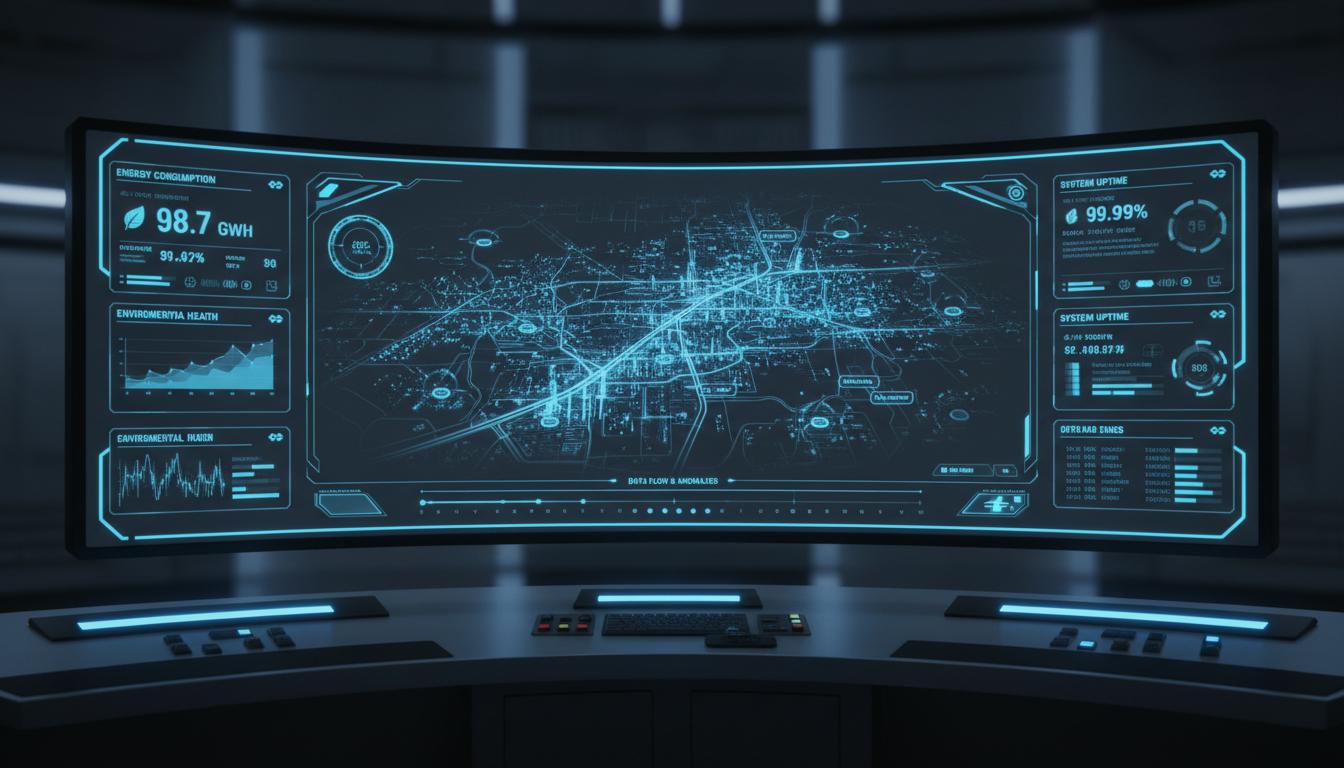
- One operations view: occupancy data feeds into the same Intelligent Operations Center (IOC) dashboard used for other smart city modules, so parking sits alongside traffic and environmental data rather than in its own silo.
Where this fits for PBTs and system integrators
This isn't sold as a standalone gadget — it's delivered the same way our other smart city modules are: through system integrators who handle city-wide installation and rollout. That matters for PBT procurement, because it means adopting smart parking doesn't require building a new vendor relationship or a new operations workflow from scratch; it extends the same delivery model already used for other Edge AI camera deployments.
The underlying hardware and architecture are the same Edge AI Camera platform behind our traffic classification module, so a PBT already running one can extend to the other without a separate integration project.
Explore how Cre8 IOT builds scalable, sustainable technology solutions for your industry. See our solutions →