Edge AI
Edge AI Camera vs Cloud CCTV: What's Actually Different
·Pathmanathan Muniandy
Key Takeaways
- Latency: on-device inference reacts in milliseconds; sending video to a cloud server for analysis adds a network round-trip before any decision is made.
- Bandwidth: cloud video analytics cost scales with every camera you add; Edge AI cameras only transmit metadata and alerts, so cost stays flat as the network grows.
- Reliability: Edge AI keeps making real-time decisions during a connectivity outage; a cloud-dependent system goes blind the moment the link drops.
Two architectures, same camera form factor
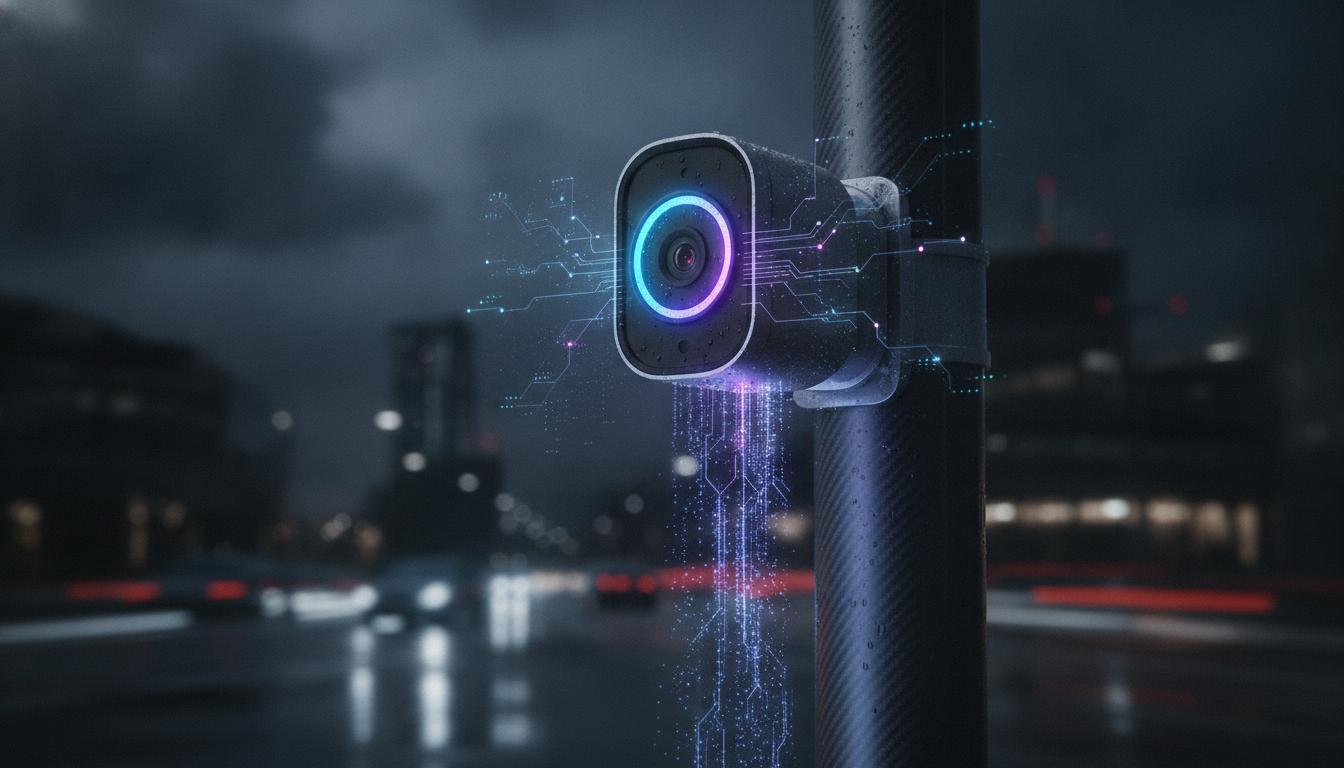
From the outside, an Edge AI camera and a standard IP CCTV camera look similar — both mount on a pole, both point at a scene, both produce video. The difference is entirely in where the thinking happens. A cloud CCTV setup streams raw video to a remote server, which runs detection and classification models and sends results back. An Edge AI camera runs those same models locally, on a Neural Processing Unit built into the camera itself, and only sends the result — a vehicle count, a classification, an alert — not the video.
Latency: milliseconds vs a round trip
For applications like traffic incident detection or safety compliance, the time between 'something happened' and 'the system knows' matters. Cloud analytics has to move video data across the internet, queue it for processing, run inference, and send a result back — even on a good connection, that's a meaningful round trip. On-device inference skips all of it: the decision happens where the camera is, in the time it takes to run one forward pass through the model.
Bandwidth: the cost that scales with your network
This is the one that determines whether a city-scale deployment is affordable at all. Continuous video upload from every camera in a network adds up fast, and the cost is linear — twice the cameras, roughly twice the bandwidth bill. Edge AI decouples the two: adding a camera adds a small, fixed stream of status updates and occasional snapshots, not a full video feed. That's the difference between a pilot staying a pilot and a system that can actually scale to a full smart city network.
Reliability: what happens when the connection drops
A cloud-dependent camera is only as useful as its internet connection. If the backhaul drops — not unusual on 4G/LTE links in areas without fibre, or during infrastructure work — a cloud CCTV system stops detecting anything until the link is restored. An Edge AI camera keeps running its detection model locally regardless of connectivity, and simply queues or drops the status updates it can't send. For safety and security use cases, that's not a minor operational detail — it's the difference between the system working when it's needed most and going blind at the worst possible time.
The hybrid model we actually use
In practice, the right architecture isn't purely edge or purely cloud — it's edge for real-time decisions, cloud for historical analysis and model updates. The camera makes the immediate call locally; aggregated data flows to the cloud on a slower cadence for trend analysis, reporting, and periodically pushing improved detection models back down to the fleet. Our Edge AI Camera platform, which powers both the Smart Parking and Smart Traffic modules, is built on that hybrid model — and on hardware rated for tropical outdoor conditions, variable power, and constrained backhaul, since that's the actual operating environment for most Malaysian smart city deployments.
Explore how Cre8 IOT builds scalable, sustainable technology solutions for your industry. See our solutions →